Commercial Pest Control for Storage Facilities
Storage Facility Pest Control in Lexington, KY
Long quiet stretches, shared walls, and a building full of undisturbed cardboard: storage facilities are built the way rodents and spiders would design them. We keep Lexington storage properties rentable, complaint-free, and documented.
5.0 · 161 Google reviews · led by an Associate Certified Entomologist
Quiet Buildings Are a Rodent's Favorite Kind
Self-storage and warehouse-storage facilities concentrate everything a mouse wants: shelter, nesting material, silence, and hundreds of doors to try. Add the insects that come with stored belongings and you get spiders, which is usually when the tenant calls arrive. Our programs are led by an Associate Certified Entomologist, so what we treat is based on what is actually there, not on a script.
As part of our commercial pest control services, storage work is exclusion and monitoring first: seal the routes in, watch the pressure with stations along corridors and wall lines, and treat where the evidence points. It is the approach that protects tenant property instead of just reacting after something is damaged.
Why Storage Facilities Draw Pests
Four structural realities do most of the damage, and every service visit works all four:
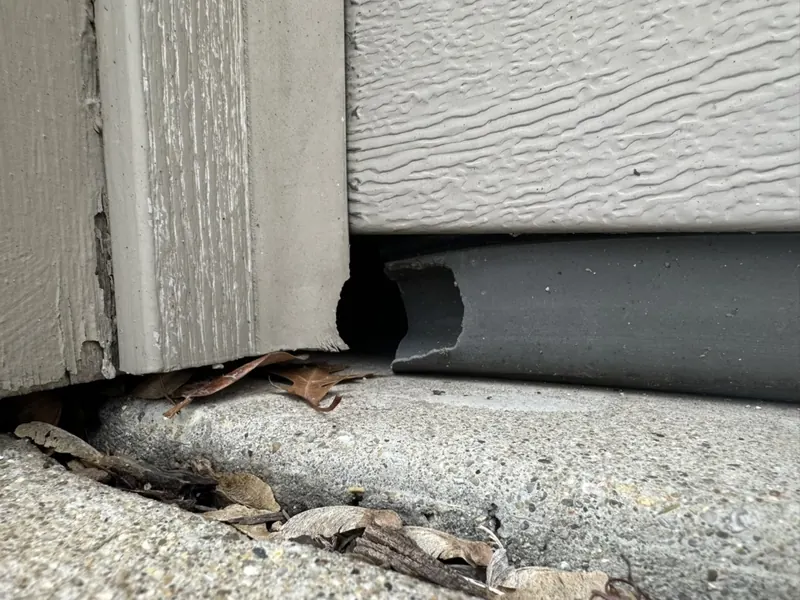
Roll-up doors by the dozen
Every door has a bottom seal, and every worn seal or corner gap is a potential entry. Mice fit through openings the size of a dime, so small defects add up fast across a facility.
Shared walls and open voids
Unit partitions share voids and chases, so a mouse that enters at one door can shop the whole row. Treating one unit without thinking about its neighbors rarely ends the problem.
Undisturbed belongings
Cardboard, fabric, and upholstered furniture parked for months make ideal nesting material, and the insects they attract feed spiders. Quiet storage is exactly what pests are looking for.
Low-traffic and vacant units
Activity in an empty unit goes unnoticed until a showing. Webs in the corners and droppings on the floor cost rentals, so vacant space needs eyes on it too.
Want the species-level detail? See our guides to rodent control and Kentucky spiders, including brown recluse, which loves undisturbed boxes as much as tenants fear it.
Tenant Complaints, Answered with Paper
A pest complaint at a storage facility is really a trust complaint: the tenant is paying you to keep their belongings safe. When one comes in, we respond fast, inspect the reported unit and its neighbors, and fix the route the pest used to get in.
Then we put it in writing. Your manager gets a report of what was found, what was done, and what happens next, something concrete to show the tenant. A manager holding a service report has an answer. A manager without one has an argument.
Unit Turnover and Vacant Units
Turnover is the natural moment to reset a unit: inspect it empty, treat if the evidence calls for it, knock down webs, and confirm the door seal still meets the floor. The next tenant starts clean, and you are not inheriting the last tenant's problem.
Vacant units get attention too, because an empty unit that sits for months is where webs and droppings quietly accumulate. Keeping vacant space inspection-ready means the unit you show is the unit you rent.
Documentation Managers Can Show Tenants
Storage tenants ask hard questions after a scare, and corporate owners ask them year round. Our storage facility clients get:
- ✓ A detailed service report after every visit, including products used and EPA registration numbers
- ✓ Findings recorded by building and unit area, so complaints map to specific fixes
- ✓ Monitoring trend reports that show pressure falling after exclusion work
- ✓ An online customer portal so the whole history is one login away
A Local Owner Who Answers
When a tenant is standing at the counter upset about droppings, a national provider offers you a case number and a service window. We offer you a call or text that reaches people who know your property, usually the same people who serviced it last time.
Berner is family-owned and Lexington-based, so your facility is a place we drive past, not a line in a national account ledger. That proximity is worth more than any service-level clause when the problem is happening right now.
Why Facilities Choose Berner
Led by an entomologist
Our program is led by an Associate Certified Entomologist, so pest identification drives every treatment decision.
Licensed and insured
Fully licensed and insured in Kentucky (KY Company Lic. #41842), with records to match.
IPM and exclusion first
We fix causes: sealing entry points, correcting conditions, and monitoring, with targeted products only where needed.
No long-term contracts
Recurring service without the lock-in. We keep facility clients by performing, not by fine print.
Real local humans
Family-owned and Lexington-based. Call or text (859) 880-1519 and a person who knows your facility answers.
Straight answers
If we do not find a problem, we say so. Our reports show what we saw, not what sells a bigger program.
Storage Facility Pest Control FAQs
A tenant found mouse droppings in their unit. What happens next?
We inspect the reported unit and the units around it, because mice almost never live in just one. We identify the entry route, set trapping and monitoring, recommend the exclusion fix that ends it, and give your manager a written report of exactly what we found and did. You answer the tenant with documentation instead of reassurance.
Can you treat a single unit, or does the whole building need service?
Either, and we will tell you honestly which one the evidence supports. Spiders webbing up one unit is often a one-unit job. Mice in a unit usually mean pressure along the whole wall line, because units share walls and voids. We scope to the problem, not to the biggest invoice.
How do you pest proof a building with dozens of roll-up doors?
In priority order, not all at once. Inspection finds the doors with failed bottom seals, corner gaps, and daylight, and those get fixed or flagged first. Paired with clean exterior lines, sealed utility penetrations, and monitoring to verify the results, targeted door work protects the building without a budget-breaking overhaul.
Do storage facilities need recurring service or a one-time treatment?
Pressure on a storage facility never stops: new tenants, new belongings, and quiet buildings that rodents and spiders love. Recurring inspection and monitoring is what keeps you ahead of complaints, but we do not use long-term contracts. If the service stops earning its place on your budget, you can stop it.
Get a Facility Assessment
We will walk your corridors, doors, vacant units, and exterior, show you exactly where your risks are, and quote a program that fits your property. The walkthrough and the quote are free, and there is no obligation either way.