Commercial Pest Control for Warehouses & Distribution
Warehouse Pest Control in Lexington, KY
Every open dock door is an invitation, and every pallet is a potential delivery vehicle. We protect Lexington warehouses with exclusion at scale, mapped monitoring that produces real data, and documentation that holds up when an auditor pulls the pest file.
5.0 · 161 Google reviews · led by an Associate Certified Entomologist
Built for Docks, Racking, and Receiving
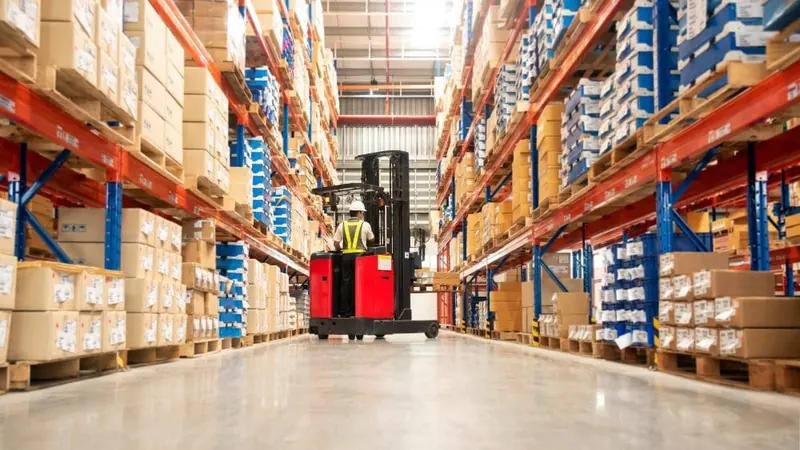
A warehouse is a huge building envelope with doors that stay open by design, which makes the pest question less about spraying and more about engineering. Our programs are led by an Associate Certified Entomologist, and our team's experience includes third-party audited food distribution facilities, where the monitoring and the paperwork have to be as tight as the building.
As part of our commercial pest control services, warehouse work is integrated pest management at scale: exclusion on the envelope, monitoring through the interior, sanitation and storage practices your team can actually maintain, and targeted treatments only where the evidence says they are needed.
The Front Line Is Your Building Envelope
Most warehouse rodent problems are door problems and grounds problems first. Exclusion at scale means working these four fronts on every visit:
Dock doors and levelers
Daylight at a dock door corner is a welcome sign for rodents. Worn seals, damaged brush sweeps, and leveler pits get flagged with photos so fixes actually happen.
Man doors and utility penetrations
Door sweeps, weather seals, and the gaps around pipes and conduit are cheap fixes that outperform any amount of interior treatment. We document every gap we find.
Vegetation and perimeter lines
Tall grass, stored pallets, and debris against the building give rodents covered runways to your walls. A clean perimeter band makes the whole exterior easier to defend and inspect.
Receiving and inbound freight
Plenty of pest problems arrive on a pallet. Simple inspection habits at receiving, plus monitors near the dock, catch hitchhikers before they reach the racks.
Sealing a building this size is a prioritized project, not a single visit. We rank the gaps by risk, fix or flag them in order, and let the monitoring data prove the work is paying off.
Monitoring That Produces Data, Not Guesswork
Interior and exterior monitoring stations are numbered, mapped, and checked on a schedule, and every catch feeds a trend log. Over a few visits that log becomes a picture: which wall has pressure, which door is failing, whether last month's exclusion work actually moved the numbers.
For rodents, that means trapping and exclusion aimed at the routes the data reveals. For insects, it means catching a problem at station 14 while it is still a station 14 problem instead of a building problem.
Stored Product Pests in Inventory
Indian meal moths and other stored product pests ride in on inbound freight and multiply in whatever inventory sits still the longest. Pheromone monitors through storage areas give early warning, and because catches are mapped, an infestation traces back to a rack section instead of a rumor.
Food-grade and general storage are different jobs, and we scope them honestly. Food-grade space gets tighter monitoring density and audit-ready records. General storage still deserves protection, because rodents and beetles do not check what the product is before they ruin the packaging it ships in.
Documentation Built for the Audit Table
When a customer auditor or a third-party inspector asks for the pest program, you should be handing over a file, not making a phone call. Warehouse clients get:
- ✓ A detailed service report after every visit, including products used and EPA registration numbers
- ✓ Audit-grade documentation program available for audited facilities: numbered station maps, catch and activity trend reports, sighting logs, and corrective action notes aligned to AIB and SQF standards
- ✓ An online customer portal so the whole history is one login away
A Local Team on Your Dock Fast
When a receiving crew finds droppings on a Friday afternoon, you need a person, not a case number. Call or text and you reach the same Lexington team every time, people who know your building, your dock schedule, and what the trend log said last quarter.
National accounts get standardized service designed around a corporate route. Your warehouse gets a program designed around your building, with the owner accountable for it by name. That is the difference you feel the first time something goes wrong at 4 pm.
Why Facilities Choose Berner
Led by an entomologist
Our program is led by an Associate Certified Entomologist, so pest identification drives every treatment decision.
Licensed and insured
Fully licensed and insured in Kentucky (KY Company Lic. #41842), with records to match.
IPM and exclusion first
We fix causes: sealing entry points, correcting conditions, and monitoring, with targeted products only where needed.
No long-term contracts
Recurring service without the lock-in. We keep facility clients by performing, not by fine print.
Real local humans
Family-owned and Lexington-based. Call or text (859) 880-1519 and a person who knows your facility answers.
Straight answers
If we do not find a problem, we say so. Our reports show what we saw, not what sells a bigger program.
Warehouse Pest Control FAQs
Can you support AIB, SQF, and similar third-party audits?
Yes. We provide the pest management records those audit programs expect to see: detailed service reports with products and EPA registration numbers, mapped monitoring stations, trend reports, and corrective action notes. We already service third-party audited food distribution facilities, so audit-grade documentation is work we do routinely. For audited facilities we offer it as a dedicated program, quoted with your service.
How do you handle warehouse rodents without rows of bait boxes?
Exclusion first. We find how rodents are getting in, starting with dock doors, man doors, and utility penetrations, and get those routes sealed. Mapped monitoring stations tell us what is actually moving, trapping removes the animals already inside, and rodenticide is a targeted tool where activity justifies it, never the whole program. A perimeter of bait boxes on its own is a subscription, not a solution.
What are stored product pests, and why do warehouses get them?
Indian meal moths, cigarette beetles, and grain beetles are the usual suspects. They arrive quietly in inbound freight and multiply in slow-moving inventory. Pheromone monitors placed through storage areas catch them early, and mapping catches turn a vague moth problem into a specific rack location you can act on.
Can you service around shifts, receiving schedules, and site safety rules?
Yes. Standard visits run on weekday early morning or late afternoon windows, and for larger operations we can build a multi-visit weekday schedule around receiving, production, and audit calendars.
Get a Facility Assessment
We will walk your docks, racking, storage, and perimeter, show you exactly where your risks are, and quote a monitoring program that fits how you operate. The walkthrough and the quote are free, and there is no obligation either way.