
Berner Pest Solutions logo: Frank the Bernese Mountain Dog
Pest Library

Centipedes & Millipedes in Lexington, KY

Centipedes and millipedes are common arthropods in Lexington, KY. Although they may look similar at first glance, their differences are important to recognize, especially since house centipedes are frequent nuisance invaders in local homes.

5.0 · 138 Google reviews · ACE-led identification & treatment

What Do Centipedes & Millipedes Look Like?

House Centipedes (a common home invader)

  • Appearance: Long, flattened bodies with 15 pairs of legs, striped yellow and brown coloring.
  • Size: 1 to 1.5 inches long.
  • Movement: Fast-moving and capable of climbing walls.
  • Behavior: Predatory; they feed on other insects like spiders, roaches, and ants. House centipedes are the most likely to invade homes and are the primary centipede we control in Lexington.
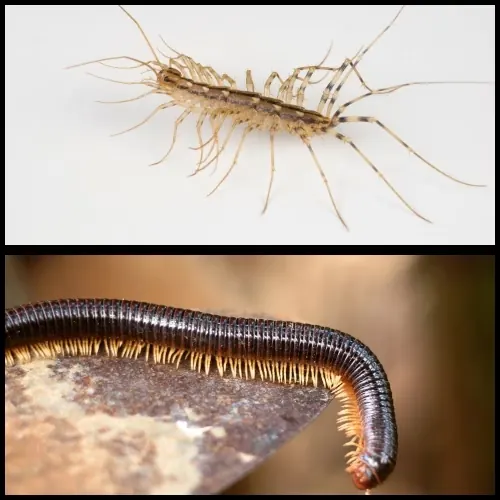
Millipedes

  • Appearance: Cylindrical bodies with numerous legs (two pairs per body segment).
  • Size: Typically 1 to 2 inches long.
  • Movement: Slow-moving, often curling into a tight spiral when disturbed.
  • Behavior: Decomposers; they feed on decaying organic material and plant matter. Millipedes are more common in outdoor environments but may enter homes during heavy rain or extreme dryness.
Difference between millipedes and the house centipede we control in Lexington

Where Do Centipedes & Millipedes Hide?

Both pests prefer damp, dark environments and are commonly found in:

  • Basements and crawl spaces
  • Bathrooms and kitchens
  • Under rocks, mulch, and leaf litter
  • Near leaky pipes and moisture-prone areas, conditions that make many Lexington homes prime candidates for centipede activity

Are Centipedes & Millipedes Dangerous?

Neither centipedes nor millipedes found in Lexington, KY pose a direct threat to humans.

How to Prevent Centipedes & Millipedes in Lexington, KY

  • Reduce moisture: Fix leaks, improve ventilation, and use dehumidifiers in basements.
  • Seal entry points: Caulk gaps around windows, doors, and foundation cracks.
  • Remove organic debris: Keep mulch, leaves, and woodpiles away from your home’s foundation.
  • Declutter & clean regularly: Minimize hiding spots inside the home.

How to Get Rid of Centipedes & Millipedes

While occasional sightings are normal, persistent infestations may require professional help. At Berner Pest Solutions, our quarterly prevention plans, Berner Basic and Berner Guard, get rid of centipedes and millipedes and keep other household pests under control. Centipede control is covered by our quarterly pest plans; see pest control pricing.

Seeing centipedes or millipedes in your home? Contact Berner Pest Solutions for a free inspection today.

Frequently Asked Questions: Centipedes & Millipedes

Are house centipedes dangerous?

No. House centipedes can technically bite, but they rarely do, and a bite is no worse than a mild bee sting. They are actually predators that eat other insects like roaches, silverfish, and spiders. That said, most people would rather not share a basement with them, and steady centipede activity usually points to a moisture problem worth fixing.

Why do I keep finding centipedes and millipedes in my basement?

Moisture. Both centipedes and millipedes need damp conditions to survive, so basements, crawlspaces, and bathrooms are their favorite spots. Reducing humidity with a dehumidifier, fixing leaks, and sealing gaps at the foundation will make your home far less inviting.

Do millipedes infest homes?

Not really. Millipedes wander in from mulch beds and leaf litter, usually after heavy rain, and most die indoors within a few days because homes are too dry for them. If you see large numbers, the fix is usually outside: pull mulch back from the foundation and clear up damp debris.

Tired of Fast-Moving Surprises in the Basement?

Berner Pest Solutions provides pet-friendly centipede and millipede control throughout Lexington, Georgetown, Nicholasville, Versailles, and surrounding Central Kentucky communities.

Get a Free Quote

Steady centipede sightings usually mean a moisture problem, and often other pests they’re feeding on. Tell us what you’re seeing and we’ll treat the source. Quarterly plan rates are on our pricing page.

Prefer to talk? Call or text (859) 880-1519 and you'll reach a real local person.

Call Now Text Us Free Quote