Berner Pest Solutions logo: Frank the Bernese Mountain Dog
Pest Library

Wasps, Hornets & Yellow Jackets in Lexington, KY

Whether you’ve spotted paper wasps building nests around your eaves, mud dauber tubes on the siding, or yellow jackets pouring out of a hole in the ground, stinging insects can quickly turn a porch or backyard into a no-go zone. While wasps contribute to the ecosystem, their nests near homes or businesses pose a real stinging hazard. The most common stinging insects in Lexington, KY include paper wasps, mud dauber wasps, yellow jackets, and bald-faced hornets.

5.0 · 138 Google reviews · safe nest removal, ACE-led

What Types of Wasps & Hornets Are in Lexington, KY?

Understanding their habits is key to effective wasp control in Lexington. Here are the four you’re most likely to meet.

1. Paper Wasps (Polistes spp.)

  • Size: 3/4 to 1 inch long
  • Color: Brown, reddish, or yellow with long legs
  • Key feature: Build umbrella-shaped paper nests under eaves and porches

Behavior & Habitat

Paper wasps are semi-social and build small, exposed nests made from chewed wood fibers. They are less aggressive than yellow jackets but will defend their nests if disturbed. They frequently nest under eaves, in attics, and inside sheds.

Seasonal Activity

Paper wasps emerge in early spring, with queens establishing new colonies. Their populations grow through summer and peak in late summer to early fall. For effective wasp control in Lexington, it’s best to remove nests in early spring before they expand. Preventative pest services can also help stop queens from overwintering in your home. If you see wasps indoors in early spring, it could indicate that some overwintering wasps found shelter inside during the winter.

How to Get Rid of Paper Wasps

  • Remove nests in early spring before populations grow.
  • Use residual insecticides to deter wasp nesting.
  • Eliminate food sources like exposed trash or sugary drinks.
  • Consult wasp control professionals in Lexington for safe nest removal.
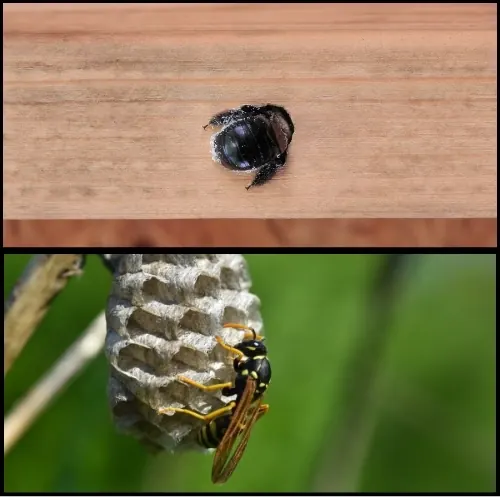
Wasp control in Lexington, KY is among several services Berner Pest Solutions specializes in.

2. Mud Dauber Wasps (Sceliphron spp.)

  • Size: 1/2 to 1 inch long
  • Color: Black or metallic blue with a long, thin waist
  • Key feature: Build tube-shaped mud nests on walls and ceilings

Behavior & Habitat

Mud daubers are solitary wasps that build mud nests. Unlike paper wasps and yellow jackets, they are non-aggressive and rarely sting. They prey on spiders, which they paralyze and store inside their mud nests. Mud daubers are beneficial pollinators but may build unsightly nests on siding or inside attics, leading to nuisance buzzing noises.

Seasonal Activity

Mud daubers are most active in late spring and summer, when they construct their nests and hunt for food.

How to Get Rid of Mud Daubers

  • Physically remove nests with a scraper.
  • Seal entry points around attics and garages.
  • Reduce spider populations, as they attract mud daubers.
  • Hire a professional wasp control service in Lexington for recurring infestations.

3. Yellow Jackets (Vespula spp.)

  • Size: 1/2 to 3/4 inch long
  • Color: Bright yellow with black stripes
  • Key feature: Extremely aggressive, especially in late summer

Behavior & Habitat

Yellow jackets are highly aggressive and territorial. They frequently nest underground, in wall voids, or inside hollow tree trunks. Unlike other wasps, they are more likely to sting unprovoked, making them a major concern near homes and businesses.

Seasonal Activity

Yellow jackets are most active in late summer and early fall, when their colonies are at their largest. Only the queens survive winter by overwintering in protected areas.

How to Get Rid of Yellow Jackets

  • Avoid swatting, as it can provoke an attack.
  • Use baited traps to catch foraging wasps.
  • Apply dust insecticides into underground nests at night.
  • Hire professional wasp control in Lexington to remove large nests safely.

4. Bald-Faced Hornets (Dolichovespula maculata)

  • Size: 1/2 to 3/4 inch long, noticeably larger than yellow jackets
  • Color: Black with distinctive white markings on the face and abdomen
  • Key feature: Build large, gray, football-shaped paper nests in trees and on structures

Behavior & Habitat

Despite the name, bald-faced hornets are technically an aerial yellow jacket. They build enclosed paper nests (often bigger than a basketball by late summer) in trees, shrubs, and under eaves. They defend those nests aggressively and can sting repeatedly, so a nest near a doorway, deck, or play area is a genuine hazard.

Seasonal Activity

Queens start new nests in spring, and colonies peak in late summer and early fall, when defensive stings are most likely. Workers die off with hard frost, and old nests are not reused the following year.

How to Get Rid of Bald-Faced Hornets

  • Keep your distance. Most stings happen when a nest is bumped or sprayed.
  • Never knock down or bag an active nest; the colony will defend it.
  • Small spring starter nests are far easier to treat than mature summer colonies.
  • Call professional wasp control in Lexington for safe removal of established nests.

Professional Wasp & Hornet Control in Lexington, KY

If wasps, hornets, or yellow jackets are becoming a problem, professional pest control services provide the safest, most effective solutions. At Berner Pest Solutions, we offer expert wasp control in Lexington, KY to protect your home year-round. One-time stinging insect treatments are listed on our pest control pricing page.

Need a nest gone? Contact Berner Pest Solutions for a free inspection today, or visit our wasp control services page to learn about our safe nest removal process. Dealing with wood-boring bees instead? See our dedicated carpenter bee control guide.

FAQ: Common Questions About Wasps & Hornets in Lexington, KY

How can I tell the difference between a wasp and a bee?

Wasps have smooth bodies and are more aggressive, while bees are hairier and focus on pollination.

When do wasps appear in Lexington?

Paper wasps start building nests in early spring, mud daubers appear in summer, and yellow jackets and bald-faced hornets are most aggressive in late summer and early fall.

Can I remove a wasp nest on my own?

Small paper wasp nests can sometimes be removed with caution, but yellow jacket nests, hornet nests, and larger infestations require professional treatment.

Are bald-faced hornets dangerous?

They defend their nests aggressively and can sting repeatedly. Large gray paper nests near doors, decks, or play areas should be removed professionally rather than sprayed or knocked down.

Do wasps die in the winter?

Most wasps die in winter, except for fertilized queens, who overwinter in protected areas and start new colonies in spring.

Does Berner Pest Solutions remove honeybee nests?

We do not currently offer services to remove honeybee colonies from within structures. There may be companies that specialize in removal and relocation of bees without harming the colony, but we have not received any requests for colony removal, so we do not have a company to refer this type of work to at this time.

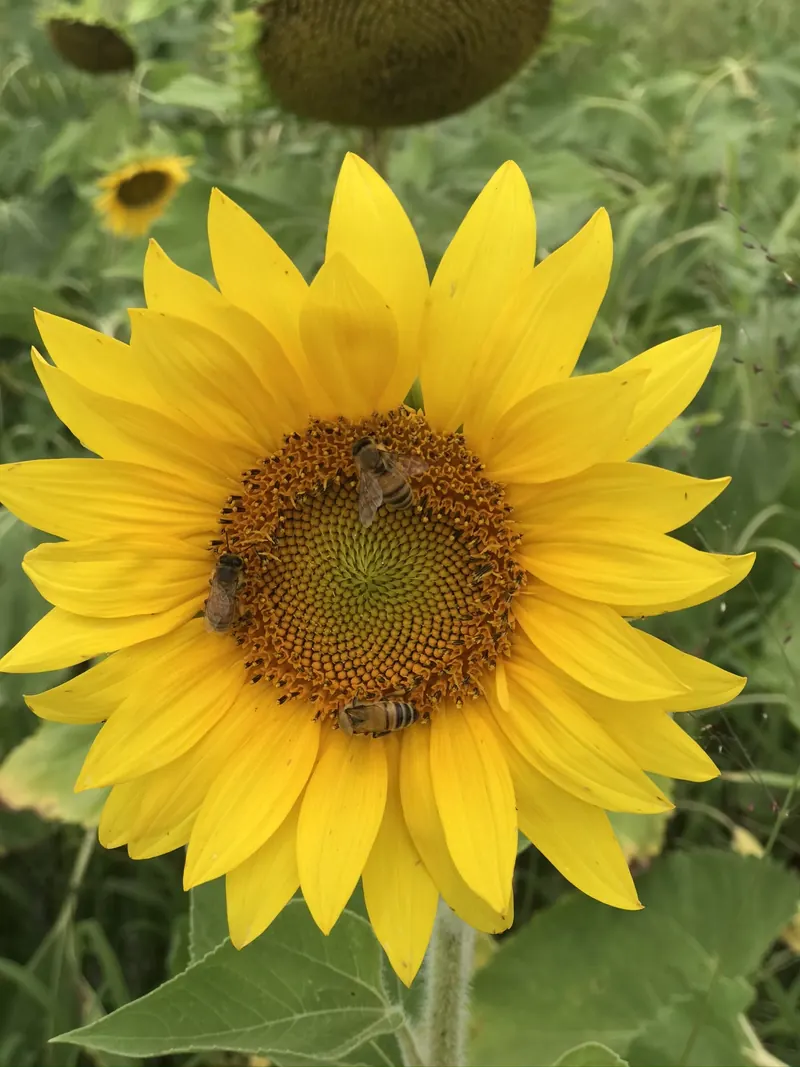
Honeybees pollinating a sunflower: beneficial pollinators, unlike the wasps and hornets that require control in Lexington

Wasps by the Door or Yellow Jackets in the Ground?

Don’t risk a sting on a ladder. We remove paper wasp, hornet, and yellow jacket nests safely, at the source. Serving Lexington, Georgetown, Nicholasville, Versailles, and surrounding Central Kentucky communities.

Get a Free Stinging Insect Quote

Tell us where the nest is (eaves, ground, wall void, or tree) and we’ll quote the right treatment. One-time stinging insect rates are on our pricing page.

Prefer to talk? Call or text (859) 880-1519 and you'll reach a real local person.

Call Now Text Us Free Quote